Sexual strangulation has become common among young people, and they call it “choking.” Many adults don’t know what young people mean by that word, so they may not ask the right questions or look for the injuries strangulation causes, especially because it often doesn’t leave any marks or visible indications of harm. Students have shared that being asked about “strangulation” instead of “choking” can feel stigmatizing, so it’s important to learn the words young people use and how to talk with them about it.
college students who had been choked were first choked between ages 10 and 17.
of students said they’d want to learn about choking one-on-one from a health care provider.
of women students said they had been choked without consent.
strangulations leave no visible injury.
Herbenick et al., Archives of Sexual Behavior (2022); Herbenick, ISSWSH webinar slides (January 2026), including students finding “strangulation” stigmatizing; It Left No Marks, Women’s Health NSW.
Add one question to your intake or confidential portion of the visit.
During sex, has anyone ever choked you, put pressure on your neck, or done something rough you didn’t want?
Say it to every adolescent and young adult patient, whatever their answer.
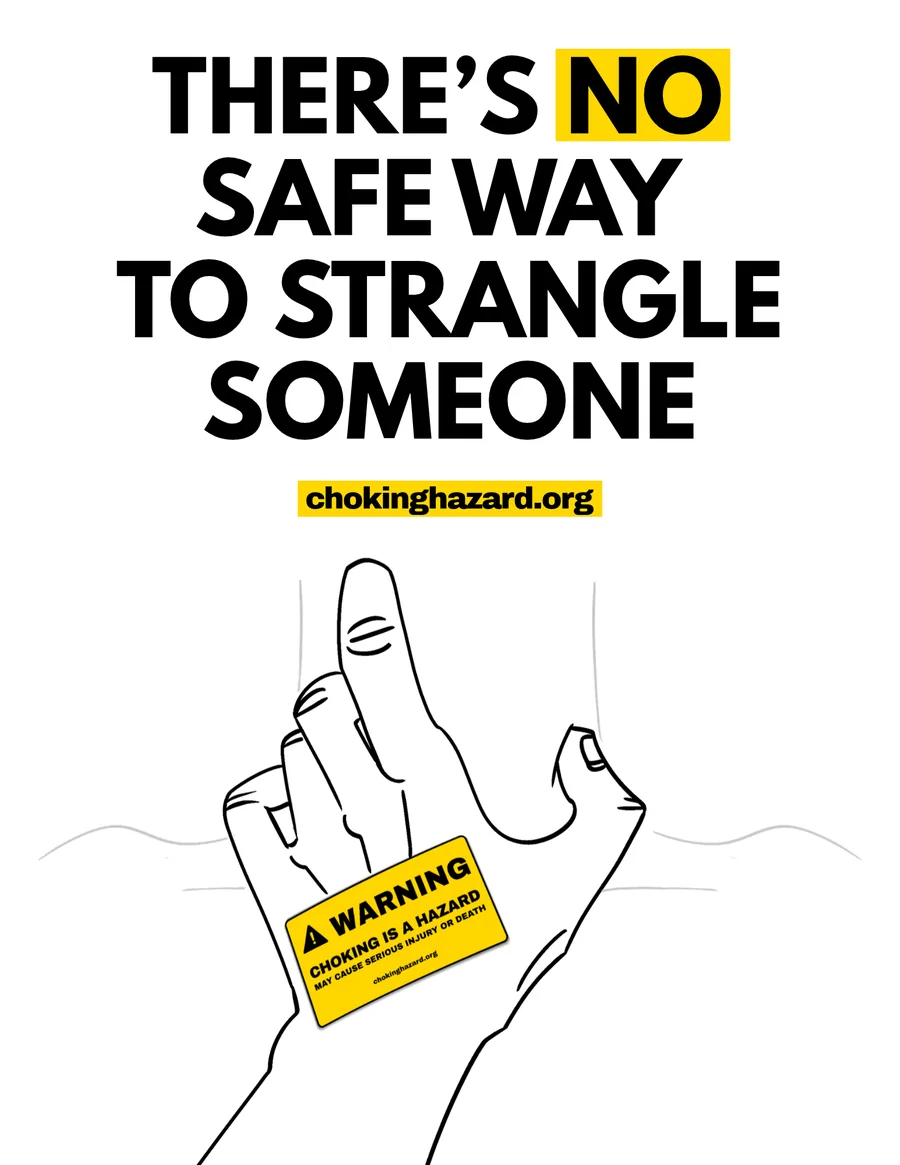
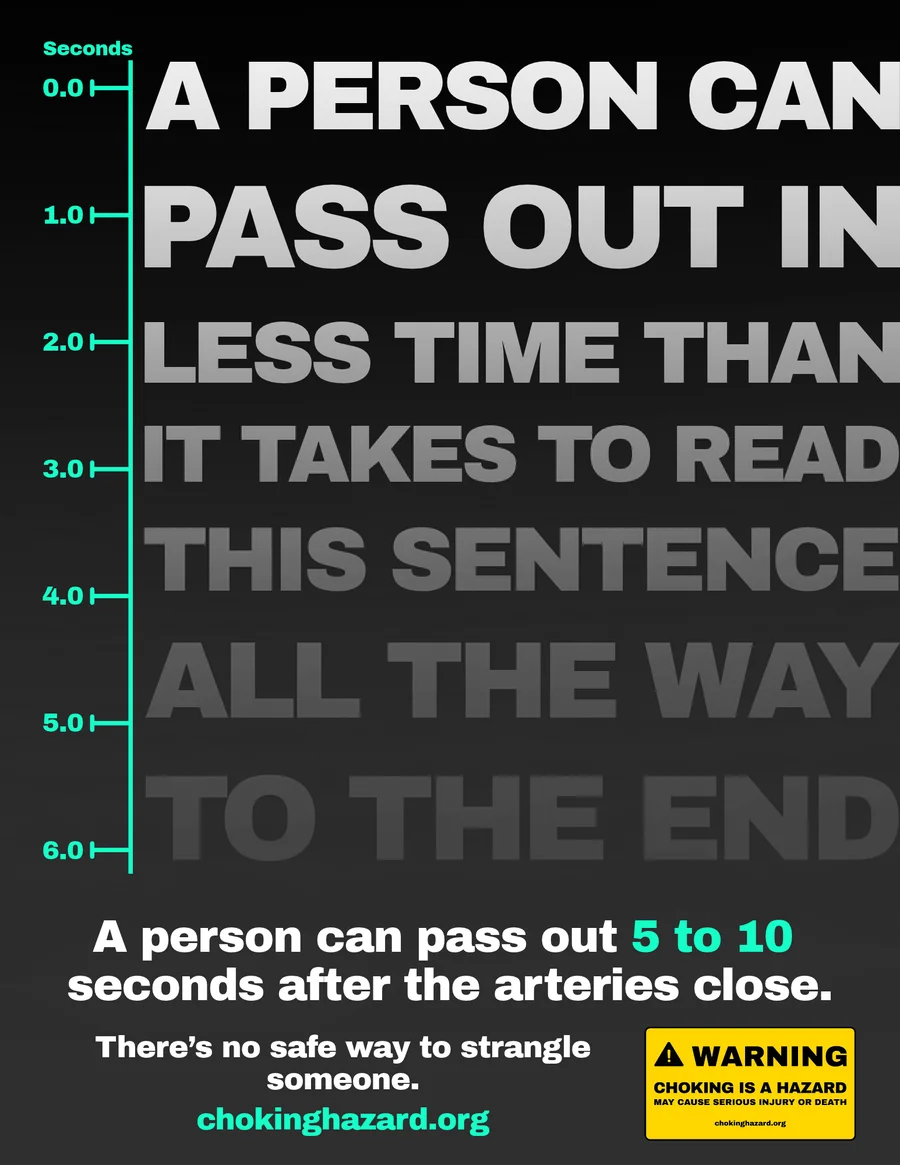
“A lot of people your age have heard that choking during sex is safe if you do it right. It isn’t. It cuts off blood to the brain and can cause a stroke without leaving a mark. If it ever happens to you, come see me.”
If the answer is yes, follow up before the visit ends.
Anticipatory guidance and an intake question about rough or unwanted acts during sex: Herbenick, ISSWSH webinar slides (January 2026); Herbenick et al., Sexuality Research and Social Policy (2025).
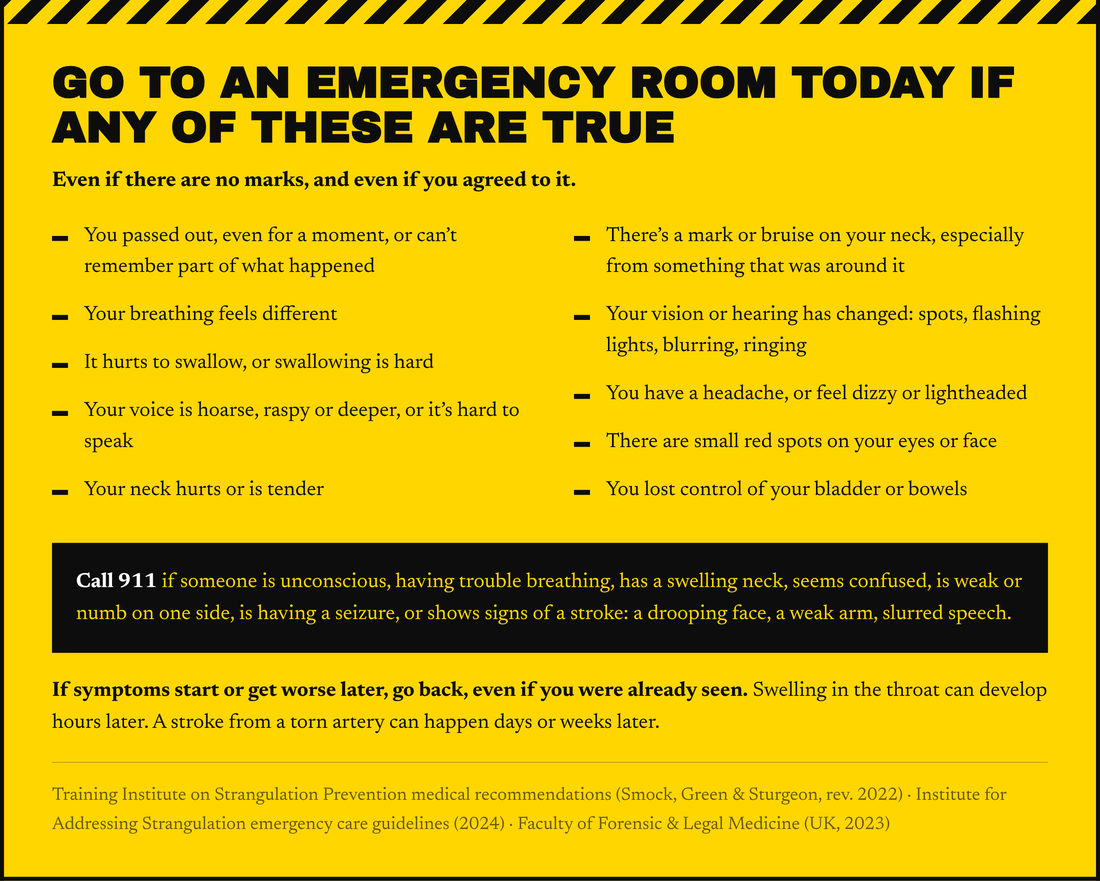
If the patient is unconscious, having trouble breathing, has a swelling neck, seems confused, is weak or numb on one side, is having a seizure, or shows signs of a stroke.
Tell the patient to come back even if they were already seen. Swelling can develop hours and even days later, and a stroke from a torn artery can follow after days or weeks.
Escalation: It Left No Marks, Women’s Health NSW.